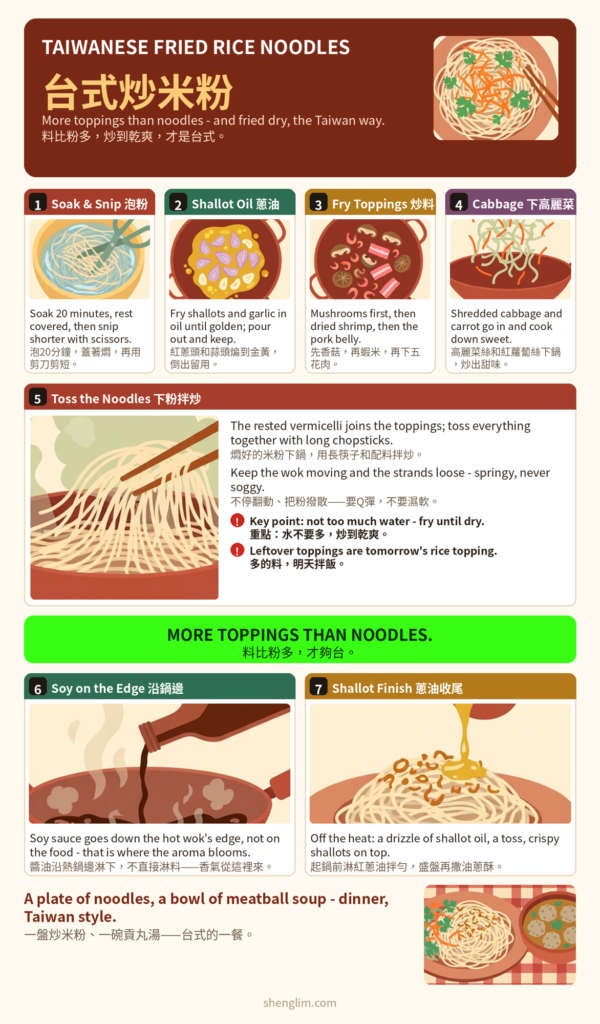
Taiwan’s home-style fried rice noodles: more toppings than noodles — pork belly, dried shrimp, mushroom, and cabbage — tossed dry in the wok and finished with shallot oil.
台式家常炒米粉:料比粉多——五花肉、蝦米、香菇、高麗菜——在鍋裡炒到乾爽,最後淋上紅蔥油。
The Ingredients
食材
Rice vermicelli, 1 cake
米粉 1 片
Pork belly strips, 100 g (about 1/4 lb)
五花肉絲 100 克(約 1/4 磅)
Dried shrimp, 1 tablespoon
蝦米 1 大匙
Dried shiitake mushrooms, 3
乾香菇 3 朵
Cabbage, 3 leaves, shredded
高麗菜 3 片,切絲
Carrot, shredded
紅蘿蔔,切絲
Shallots, 3
紅蔥頭 3 顆
Garlic, plus 1 tablespoon minced
蒜頭,另蒜末 1 大匙
Cilantro, 2 sprigs
香菜 2 株
Soy sauce
醬油
Rice wine
米酒
White pepper
白胡椒
Step 1. Soak and Snip
步驟一:泡粉剪短
Soak the rice vermicelli in water for 20 minutes. Give it 1 minute in hot water, lift it into a bowl, cover, and let it steam in its own heat — that rest is what makes it springy. Then snip the strands shorter with scissors, so they toss easily.
米粉泡水 20 分鐘。再放熱水 1 分鐘,撈出放進碗裡,蓋上蓋子燜——這樣才會 Q 彈。然後用剪刀把米粉剪短一點,比較好炒開。
Step 2. Shallot Oil First
步驟二:先煸蔥油
Heat oil in the wok with the garlic and shallots and fry until they turn golden and fragrant. Pour everything out and set it aside — this oil comes back at the very end.
炒鍋放油,加入蒜頭和紅蔥頭,煸到金黃出香氣。整鍋倒出來放旁邊——這油最後才回來。
Step 3. Fry the Toppings
步驟三:炒配料
In the same wok, dry-fry the mushrooms until they color a little and smell nutty. Add the dried shrimp and stir-fry, then the pork belly — belly is fatty enough that you need no extra oil.
用原鍋先乾煸香菇,煸到微微變色、聞到香味。加入蝦米拌炒,再下五花肉——五花肉自己會出油,不必另外加油。
Step 4. Cabbage and Braise
步驟四:下菜煨煮
Add the cabbage and carrot shreds. Drizzle soy sauce down the hot edge of the wok — not onto the food — and toss. Splash in the rice wine, then the shrimp and mushroom soaking waters, and let it braise briefly; the soaking waters bring out the cabbage’s sweetness. Finish with white pepper.
加入高麗菜絲和紅蘿蔔絲。醬油沿著熱鍋邊淋下去——不要直接淋在料上——拌炒。再淋米酒,接著倒入泡蝦米和泡香菇的水,稍微煨煮;這些水會帶出高麗菜的甜味。最後撒白胡椒。
Step 5. Toss the Noodles
步驟五:下粉拌炒
Add the rested vermicelli and toss it with the toppings using long chopsticks, loosening the strands as you go. Keep the liquid low and fry until the noodles are dry and springy, then scatter in the cilantro.
把燜好的米粉下鍋,用長筷子和配料拌炒,一邊把米粉撥散。水分不要多,炒到乾爽 Q 彈,再撒入香菜。
Step 6. Finish and Serve
步驟六:淋油上桌
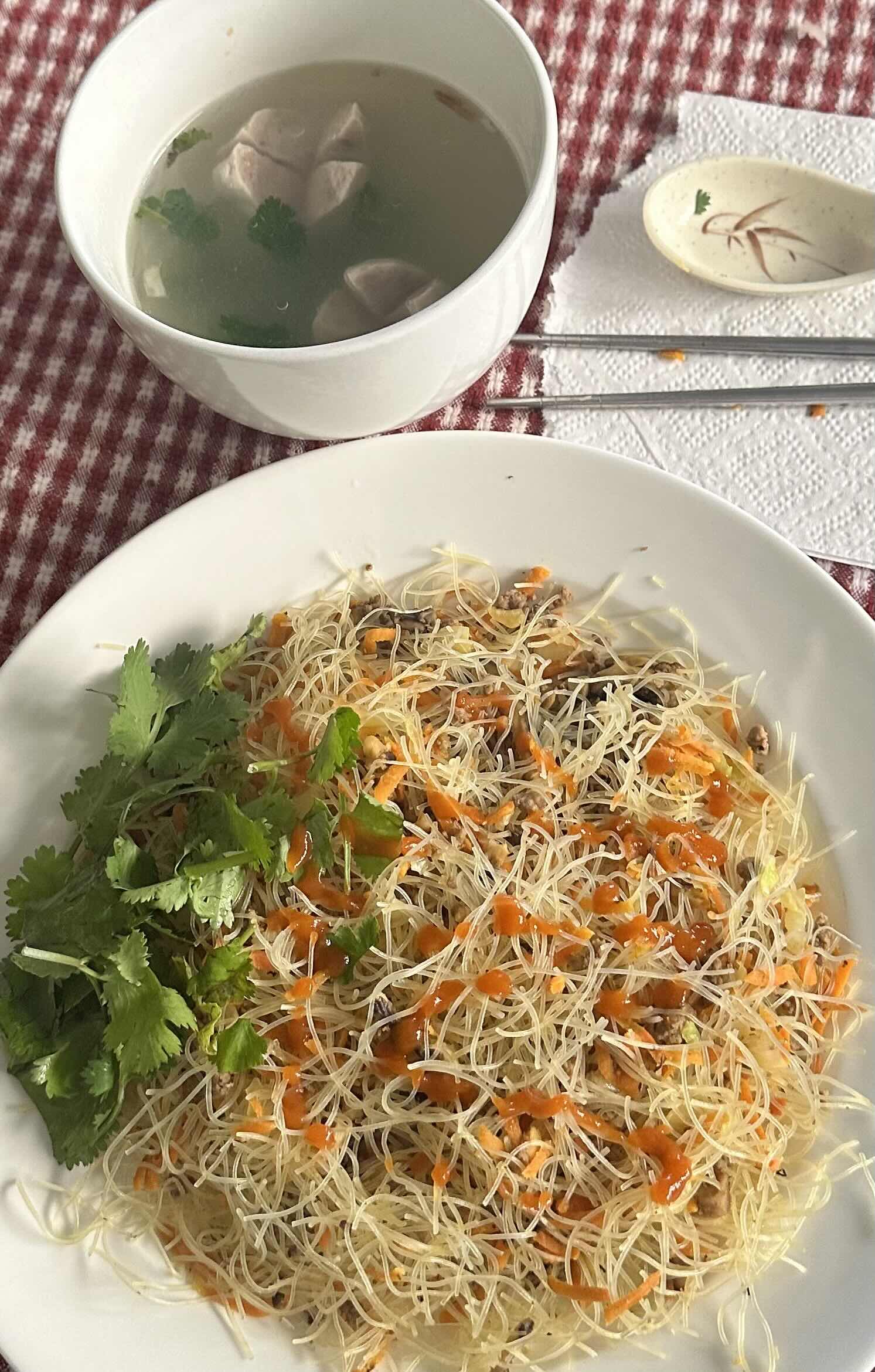
Just before the heat goes off, drizzle the shallot oil over the noodles and toss once more. Plate it, scatter crispy shallots on top, and serve with fresh cilantro on the side — and a bowl of meatball soup, if you want the full set.
起鍋前淋入紅蔥油,關火拌勻。盛盤後撒一點油蔥酥,旁邊配新鮮香菜——再來一碗貢丸湯,就是完整的一套。
Good to Know
須知
More toppings than noodles is the rule, not an accident. Leftover toppings are excellent over plain rice the next day.
料比粉多是規矩,不是意外。多的料留到明天拌飯,也非常好吃。
The number one key: do not add too much water. The soaking waters are there for flavor — the finished dish should be dry, not saucy.
第一重點:水不要加太多。泡料的水是為了香味——成品要乾爽,不要濕答答。
The lazy plating works too: spread the noodles on a plate and pile the toppings on top, untossed. Easy, and it looks good.
懶人裝盤也可以:米粉攤在盤子上,料鋪在上面,不必拌,又方便又好看。